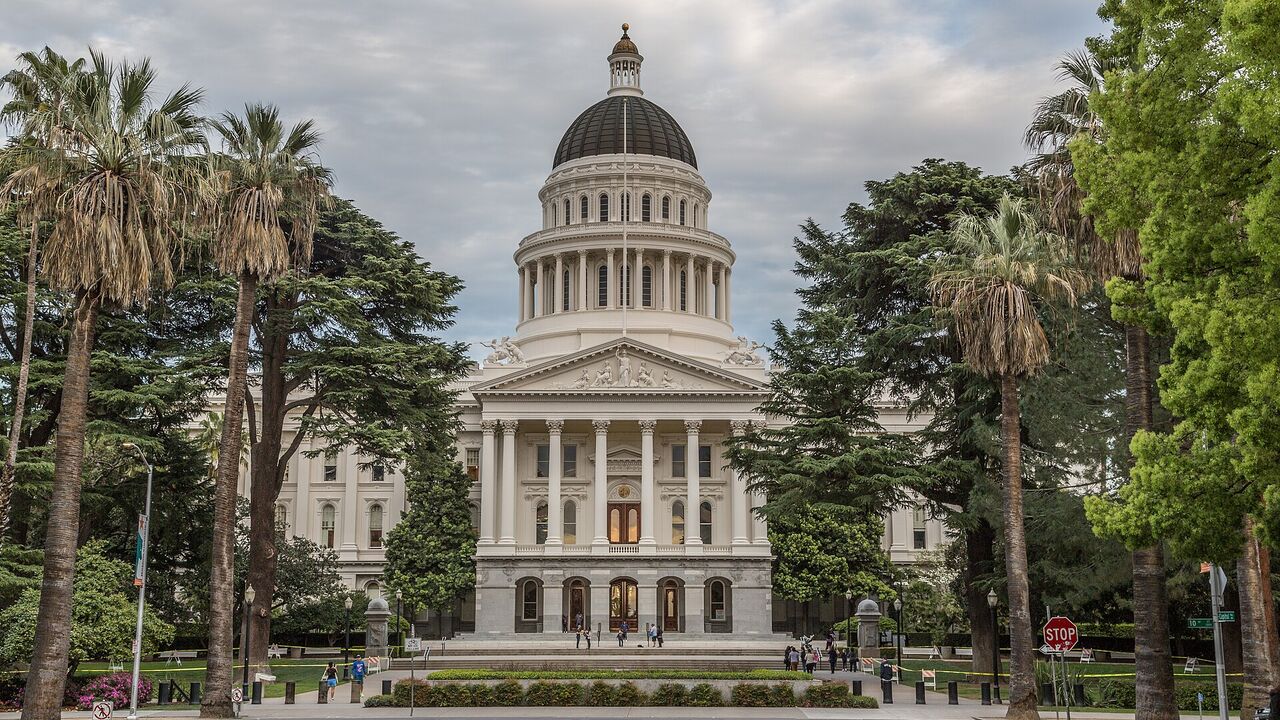
A one-time 5% tax on the net worth of California's billionaires will go before voters on November 3. Secretary of State Shirley N. Weber announced on June 17, 2026 that the initiative had cleared the random signature sample, making it eligible for the ballot unless its backers withdrew it by June 25. The measure's design matters well beyond the roughly 200 people it is aimed at, because it fixes residency on a date that has already passed.
What changed
The initiative needed 874,641 valid signatures and qualified once the random sample projected more than 962,106, the level that avoids a full count. The state's official summary describes a tax of up to 5% on individuals and trusts with covered assets above $1 billion. Covered assets include businesses, securities, art, collectibles and intellectual property. Real property and some pensions and retirement accounts are excluded. Ninety percent of the money would go to health care and 10% to food assistance or education.
The text of the 2026 Billionaire Tax Act separates two dates. Who owes the tax is decided by residency on the "tax obligation date," January 1, 2026. How much is owed is measured on the "valuation date," December 31, 2026. A married couple counts as one individual. The full 5% applies at a net worth of $1.1 billion or more; between $1 billion and $1.1 billion the rate drops by 0.1 percentage point for every $2 million below $1.1 billion.
Why moving now may not help
Because liability attaches to anyone who was a California resident on January 1, 2026, a relocation completed after that date does not remove a person from the base. The act also pulls back into net worth property transferred for less than fair market value after October 15, 2025, when the transferred items are worth more than $1 million, and it reaches certain non-grantor trusts funded by a billionaire. Taxpayers can seek a different apportionment only by proving, under a clear and convincing standard, that their wealth neither accumulated in California nor was substantially sustained there for 365 days during the 48 months before the valuation date.
CalMatters reported that six billionaires had already moved, a group it tied to about $27 billion in potential revenue, and that challenges to taxing people who left after January 1 are expected. Any ruling on that question would come after the vote.
How illiquid stock is valued
Public stock is presumed to be worth its market price on the valuation date. Private business interests are valued under a formula that starts from book value and book profits, with a certified appraisal required when the owner cannot obtain those figures. Two floors matter for founders: an asset cannot be valued below its insured amount, and a company cannot be valued below the price set in any funding round or equity sale within two years of the valuation date unless the taxpayer shows otherwise by clear and convincing evidence. Discounts that push a partial interest below its proportional value are disallowed.
For owners short on cash, the act offers two routes. The tax can be paid with the 2026 income tax return or in five equal annual installments, with a nondeductible 7.5% charge each year on the unpaid balance. Separately, a qualifying liquidity-constrained taxpayer may attach assets to an optional deferral account, which postpones tax on those assets until distributions or sales occur.
The after-tax math
Example: a founder resident in California on January 1, 2026, holds a net worth of $2 billion on December 31, 2026, mostly private stock last priced in a 2025 funding round. The tax is 5%, or $100 million. Paid in five installments of $20 million, the deferral charge, applied as we read the text, would add $6 million in year two (7.5% of the $80 million still owed), then $4.5 million, $3 million and $1.5 million, for about $15 million in total charges.
| Net worth on Dec. 31, 2026 | Effective rate | Tax |
|---|---|---|
| $1.0 billion | 0% | $0 |
| $1.05 billion | 2.5% | $26.25 million |
| $1.1 billion | 5% | $55 million |
| $2 billion | 5% | $100 million |
The state's fiscal estimate expects wealth tax revenue of tens of billions of dollars spread over several years, alongside a likely ongoing drop in state income tax revenue of hundreds of millions of dollars or more per year.
What to consider
Families near the threshold with concentrated private holdings often review how recent funding rounds, insurance schedules and trust structures would be read under the act's valuation rules. Whether an installment plan or a deferral account makes sense depends on liquidity and on how the Franchise Tax Board writes its guidance, questions worth discussing with a CPA and California tax counsel before year-end.
What to watch
The campaign is lopsided in money but not in polling. Opponents had raised $107.9 million as of June 15, including $82 million from Sergey Brin, according to CalMatters, while Gov. Gavin Newsom opposes the measure and early polls show support around 50% to 52%. If voters approve it, expect immediate constitutional litigation over the January 1 residency snapshot, followed by regulations on appraisals and deferral accounts.
Sources
- First reported Secretary of State Shirley N. Weber announces new measure eligible for November 2026 ballot: imposes one-time tax on certain individuals and trusts — California Secretary of State
- California One-Time Wealth Tax Initiative (2026), including the text of the 2026 Billionaire Tax Act — Ballotpedia
- A tax on billionaires qualified for the November ballot. 5 things to know — CalMatters
- California billionaire tax proposal qualifies for the November ballot — NBC News
After TAX is an independent publication. Articles are general information, not tax, legal or investment advice. Consult a licensed professional about your situation.