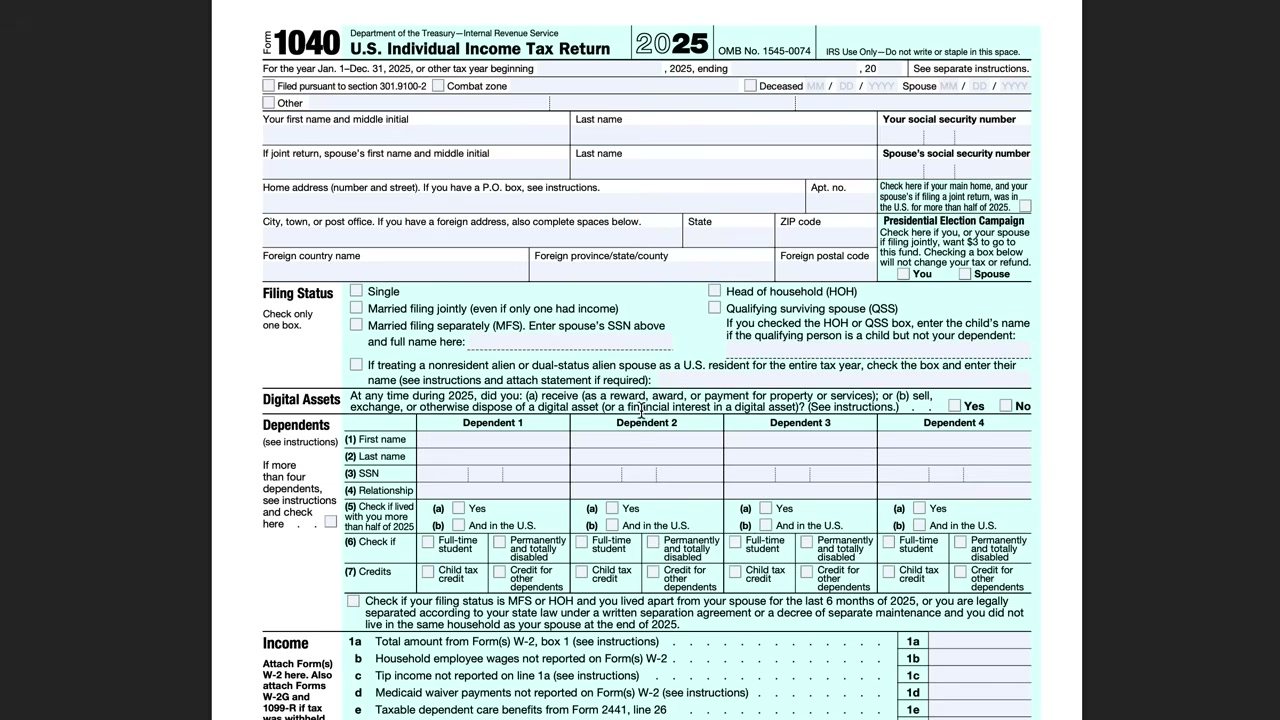
The IRS used National Payroll Week to urge a paycheck checkup. For employees paid partly in restricted stock, the flat 22% supplemental rate often falls well short of the tax actually owed.
The IRS reminded taxpayers on extension that filing now, rather than at the deadline, avoids the fall rush and unpaid balances that keep accruing interest and penalties regardless of the extension.
The IRS said its decades-old FIRE e-file system stops accepting 1099s and other information returns on November 19, 2026, forcing owners, landlords and family offices onto the newer IRIS platform.
The IRS said interest on underpaid individual taxes will stay at 7 percent through year-end, a rate that quietly punishes high earners who skip estimated payments or extension balances.
Notice 2026-49 lays out optional sample forms and a five-step process for direct rollovers under SECURE 2.0, and signals future rules that could end mailing rollover checks to participants.
Second-quarter estimated payments for 2026 are due June 15. High earners with equity vests, gains or K-1 income face a stricter prior-year test, and IRS underpayment interest runs at 6% to 7%.
The IRS says tens of millions of filers claimed the new overtime, senior and car-loan breaks. For households earning well into six figures, the income limits erase most of them, leaving a shorter list.
The IRS reminded taxpayers that Form 4868 pushes the filing deadline to October 15, but any balance owed is still due April 15, a distinction that matters most for K-1 recipients and business owners who routinely extend.
The retooled online calculator now factors in the tips, overtime, senior and car-loan-interest deductions, giving high earners a way to rework their 2026 W-4 before a surprise tax bill or penalty arrives.
The IRS's new Schedule 1-A bundles four temporary deductions into one form, and its line-by-line phaseout math determines whether affluent households get any benefit at all.
About 164 million individual returns are expected by the April 15 deadline, the first to reflect the $40,000 SALT cap and a new schedule for deductions on tips, overtime, car loan interest and seniors.
Fidelity's year-end guidance walks through the tax moves that still matter for 2026, from Roth conversions and the new $6,000 senior deduction to RMD deadlines and charitable-giving limits.
Agemy Financial Strategies' 2026 planning guide pairs the tax law's new brackets with higher retirement contribution limits, asset location and concentrated-stock timing.
The IRS's first 2026 get-ready notice is mostly about paperwork and direct deposit, but for high earners the run-up to January 1 also means a last chance to use several rules before they tighten under the new tax law.
The IRS says the government shutdown does not move the Oct. 15 deadline for 2024 returns. For extended filers, penalties, SEP contributions and payment plans all hinge on filing on time.
Treasury and IRS guidance issued August 21 explains how a binding contract and payment can preserve the $7,500 EV credit, and why home energy credits turn on installation, not payment.
Smaller Washington estates now owe less, but estates above roughly $9 million pay more under a schedule that tops out at the highest state estate tax rate in the country.
 September 10, 2026