The IRS on March 12, 2026 released an updated version of its Tax Withholding Estimator, the free online tool that helps workers and retirees check whether enough tax is coming out of each paycheck. The refresh is the agency's first broad attempt to let the calculator account for the One, Big, Beautiful Bill Act (OBBBA), the tax law that rewrote several individual provisions starting with the 2025 tax year.
What changed
Previous versions of the estimator were built around pre-OBBBA rules. The updated tool now walks users through new inputs tied to the law's temporary deductions: the exclusion for qualified tips, the deduction for overtime pay, the extra deduction for taxpayers 65 and older, and the new deduction for interest paid on loans for U.S.-assembled vehicles. It also reflects revised family credit amounts and changes affecting homeowners and charitable donors. The IRS says the tool requires no login or personal identifying information and takes roughly 25 minutes to complete.
Who is affected
High-income households are squarely in scope, for two different reasons. First, many high earners saw their 2025 tax picture shift meaningfully under OBBBA — through changes to the state and local tax deduction cap, alternative minimum tax exemption phaseouts, and the new deductions above — yet payroll withholding tables were not overhauled to match every provision. Second, dual-income professional households, business owners who also draw W-2 wages, and retirees taking pension or IRA distributions are the taxpayers most likely to have withholding that no longer lines up with what they will actually owe. Payroll withholding tables are built around standardized assumptions about filing status and a single job; they do not automatically account for a second earner's income, a large bonus, or income from outside employment, all of which are common at higher income levels and all of which the estimator is designed to incorporate.
The after-tax math
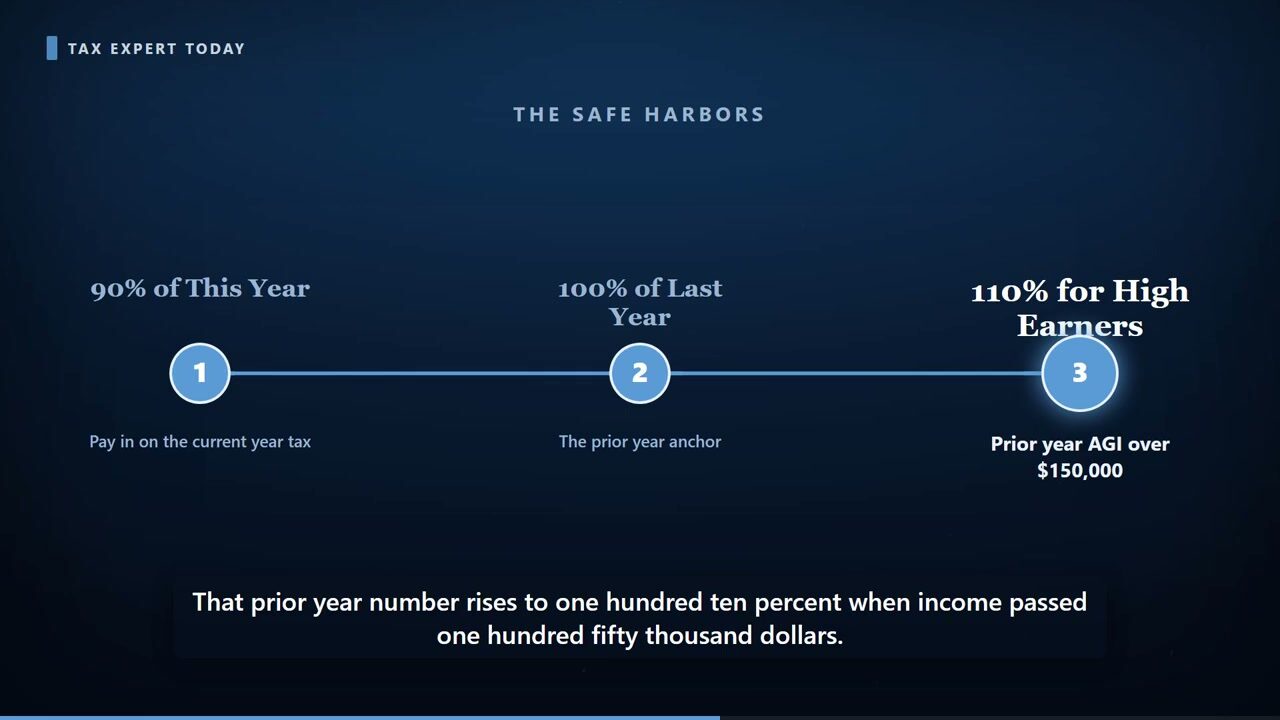
Consider a married couple with combined wages of $650,000, one spouse earning a portion of pay in the form of overtime, and $12,000 in mortgage-adjacent itemized deductions. If their payroll withholding was set up before OBBBA's changes were finalized, they may be over- or under-withheld by several thousand dollars once the new overtime deduction and revised bracket thresholds are applied. Running the estimator produces a specific recommended withholding amount or additional per-paycheck adjustment, translated directly into entries for a new Form W-4. A couple who discovers they are underpaying by an amount that would trigger the safe-harbor threshold (generally owing more than $1,000 after withholding and credits) can increase withholding for the remainder of the year to avoid an underpayment penalty when they file in 2027.
Moves to discuss with your advisor
Households with significant 2025 refunds or balances due, or with income sources beyond a single W-2 — equity compensation, K-1 income, rental property, or large investment distributions — may want to run the estimator using a recent pay stub and their most current tax return as inputs, then submit a revised Form W-4 or Form W-4P to the relevant payer. Because the estimator produces a household-level recommendation, married couples who both work should run it jointly rather than separately to avoid double-counting deductions or credits. This is a matter of timing and paperwork, not tax strategy, so it is often the kind of task a CPA or financial planner can execute as part of a broader mid-year checkup rather than something requiring a large planning engagement.
What to watch
The IRS has signaled that additional guidance and possibly revised withholding tables tied to OBBBA provisions could follow later in 2026, which would affect employer payroll systems more directly than the estimator does. Taxpayers who adjust withholding now based on the current tool should plan to revisit the estimator again later in the year, particularly if Congress or Treasury issues further technical guidance on the tip, overtime, or senior deductions before the 2026 filing season opens in January 2027. The tool itself remains available year-round at IRS.gov, so households whose income changes mid-year — a bonus, a new business line, or a large capital gain — can rerun it more than once rather than treating a single estimate made in the spring as final.
Sources
After TAX is an independent publication. Articles are general information, not tax, legal or investment advice. Consult a licensed professional about your situation.