The third installment of 2026 federal estimated tax is due Tuesday, September 15. The IRS used a September 10 reminder to steer taxpayers toward Direct Pay, its free bank-account payment tool, as households that sold company stock, took part in tender offers or realized large investment gains over the summer work out how much they owe.
Who needs to pay
The IRS generally expects estimated payments from individuals who will owe $1,000 or more when they file. Wages usually have tax withheld. Capital gains, dividends, interest, rental income and self-employment income usually do not, a point the accounting firm Murphy, Murphy & Murphy highlighted in its deadline note. Shares sold in a tender offer or after an IPO lockup can produce a large gain in a single quarter with no withholding attached to it.
The safe harbors
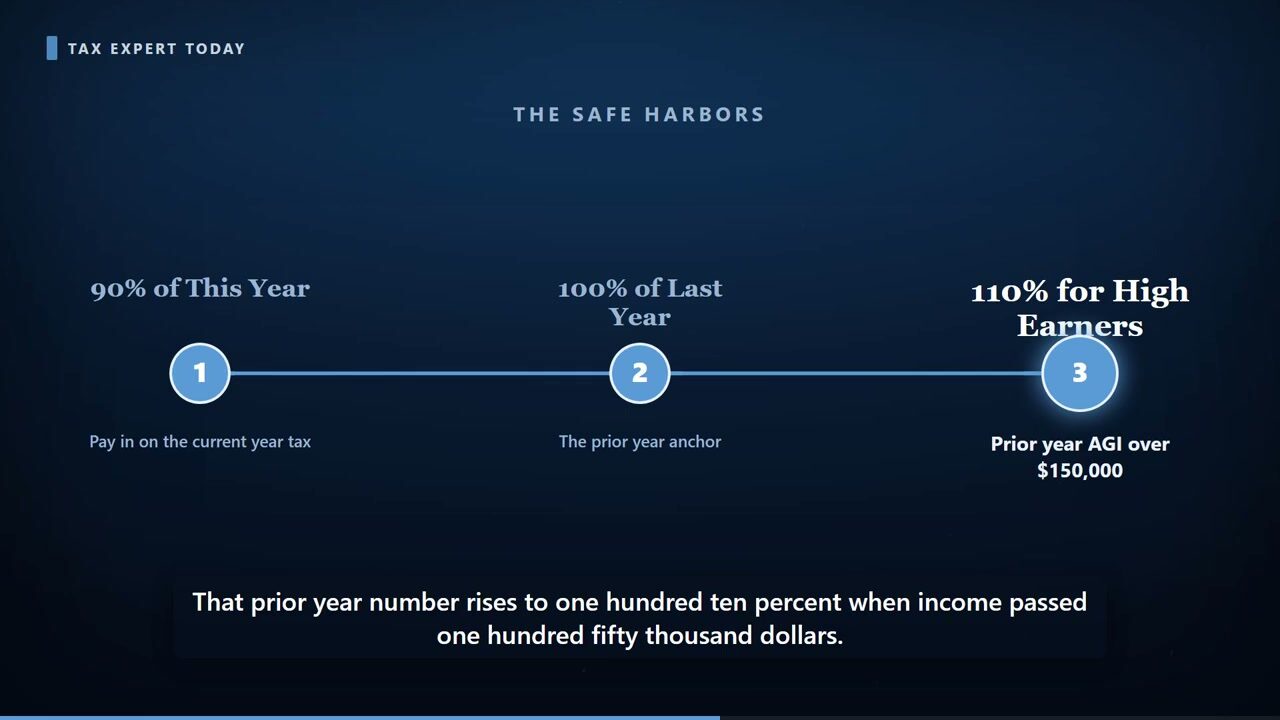
The underpayment penalty is generally avoided when withholding and estimates cover at least 90% of this year's tax or 100% of last year's tax. The prior-year test rises to 110% when prior-year adjusted gross income exceeded $150,000, which covers most readers of this publication. The penalty works like interest: the IRS charges individuals 7% a year, compounded daily, on underpayments for the fourth quarter of 2026, a rate unchanged from the third quarter.
The after-tax math
Example with round numbers: a married couple owed $300,000 of federal tax for 2025, on adjusted gross income well above $150,000. To rely on the prior-year safe harbor for 2026, they need $330,000 in withholding and estimates. If wage withholding will total $240,000, estimates must cover $90,000, or $22,500 per installment.
| Installment | Required | Paid | Cumulative shortfall |
|---|---|---|---|
| First | $22,500 | $0 | $22,500 |
| Second | $22,500 | $0 | $45,000 |
| Third (Sept. 15) | $22,500 | $67,500 | $0 |
| Fourth | $22,500 | $22,500 | $0 |
Catching up in full with the September payment stops further charges, but the missed installments still carry interest for the time they were late. At 7% a year, $22,500 outstanding for about five months costs roughly $650, and a second $22,500 outstanding for about three months costs roughly $400. Those figures ignore daily compounding. Waiting until the fourth installment to catch up would add several more months of interest on $67,500.
For a couple whose income was bunched into the summer, the annualized income installment method on Form 2210 can reduce or eliminate the penalty for earlier quarters by matching required payments to when income was actually received. The calculation takes more work, and a CPA can confirm whether it produces a better result than the regular method.
How to pay
- Direct Pay moves money from a U.S. bank account at no charge, can be scheduled up to 365 days ahead and provides a confirmation number. Scheduled payments can be changed or canceled up to two business days before the payment date. Each payment must be under $10 million, and Direct Pay cannot issue refunds.
- Larger payments can go by same-day wire or through the Electronic Federal Tax Payment System, according to the IRS.
- Withholding is an alternative for employees: the IRS allows people with wages to cover their tax by adjusting Form W-4 instead of making estimated payments.
What to consider before paying
Households with summer liquidity events often run a full-year projection before sizing the September payment, including any sales planned for the fall, state estimated taxes that follow their own rules, and whether the current-year or prior-year safe harbor is cheaper to meet. For a year with a one-time windfall, the prior-year test often requires far less cash up front than 90% of the current year's tax.
What to watch
The fourth installment for 2026 falls in January 2027 and is the last chance to cover gains from late-year sales without further interest. Payments made through Direct Pay by September 15 are credited on the date scheduled, so the confirmation number is worth keeping with the year's tax records.
Sources
- First reported IR-2026-109: IRS reminder: Direct Pay offers free, easy way to pay taxes — IRS
- Estimated taxes — IRS
- IR-2026-98: Interest rates remain the same for the fourth quarter of 2026 — IRS
- September 15 Is the Third Quarter Estimated Tax Deadline — Murphy, Murphy & Murphy
After TAX is an independent publication. Articles are general information, not tax, legal or investment advice. Consult a licensed professional about your situation.