The IRS said on August 21, 2026, that the interest rate charged on underpaid individual income tax will remain 7% for the calendar quarter beginning October 1, 2026, unchanged from the third quarter. The rate, set out in IR-2026-98 and formalized in Revenue Ruling 2026-15, applies daily and compounds, and it is the number that determines how expensive it is to underpay estimated taxes or carry a balance past a filing deadline.
What changed
Under Section 6621 of the tax code, the IRS resets its interest rates quarterly based on the federal short-term rate, in this case as determined during July 2026. For individuals, the underpayment and overpayment rates are both set at the federal short-term rate plus 3 percentage points, currently 7%. Corporations pay a similar underpayment rate but receive a lower overpayment rate, 6% generally and just 4.5% on refunds above $10,000, and corporations that persistently underpay face a 9% large corporate underpayment rate. None of these rates changed from the prior quarter, but the announcement is a reminder that the rate has sat at an unusually high 7% to 8% band since 2023, well above the near-zero rates many taxpayers grew used to earlier in the 2010s.
Who is affected
The rate matters most to high earners with income that is not fully covered by withholding: business owners, partners receiving K-1 income, executives with large capital gains or vested equity, and anyone on a fall extension who owes a balance from April. It also affects households that intentionally underpay because they would rather hold cash than send it to the Treasury early, a strategy that only works if the after-tax return on that cash exceeds 7%.
The after-tax math
Example: a couple who underpays their estimated taxes by $100,000 for a full year owes roughly $7,000 in IRS interest at the 7% rate, and that interest is not deductible. To beat that cost by simply holding the cash, the couple would need an after-tax return well above 7% on that money, meaning a pretax return above 9% to 10% for someone in the top bracket, a bar that is hard to clear reliably with cash or short-term bonds. By contrast, someone who owes an extension balance and pays it two months late owes roughly $1,167 in interest on that same $100,000, plus a separate failure-to-pay penalty of 0.5% per month if the balance was not paid by the original April deadline, even with a valid extension to file.
Why the rate has stayed high
The federal short-term rate that anchors Section 6621 tracks short-term Treasury yields, which rose sharply during the Federal Reserve's 2022-2023 rate-hiking cycle and have come down only gradually since. Because the individual underpayment rate is short-term-plus-three, it has held in a narrow band of 7% to 8% for three years, compared with 3% as recently as 2021. A safe-harbor strategy that made sense when underpayment interest was 3%, deliberately paying less than owed and investing the difference, is a much harder trade to win at 7%, especially after accounting for the fact that IRS interest is nondeductible while investment gains are taxable.
Moves to discuss with your advisor
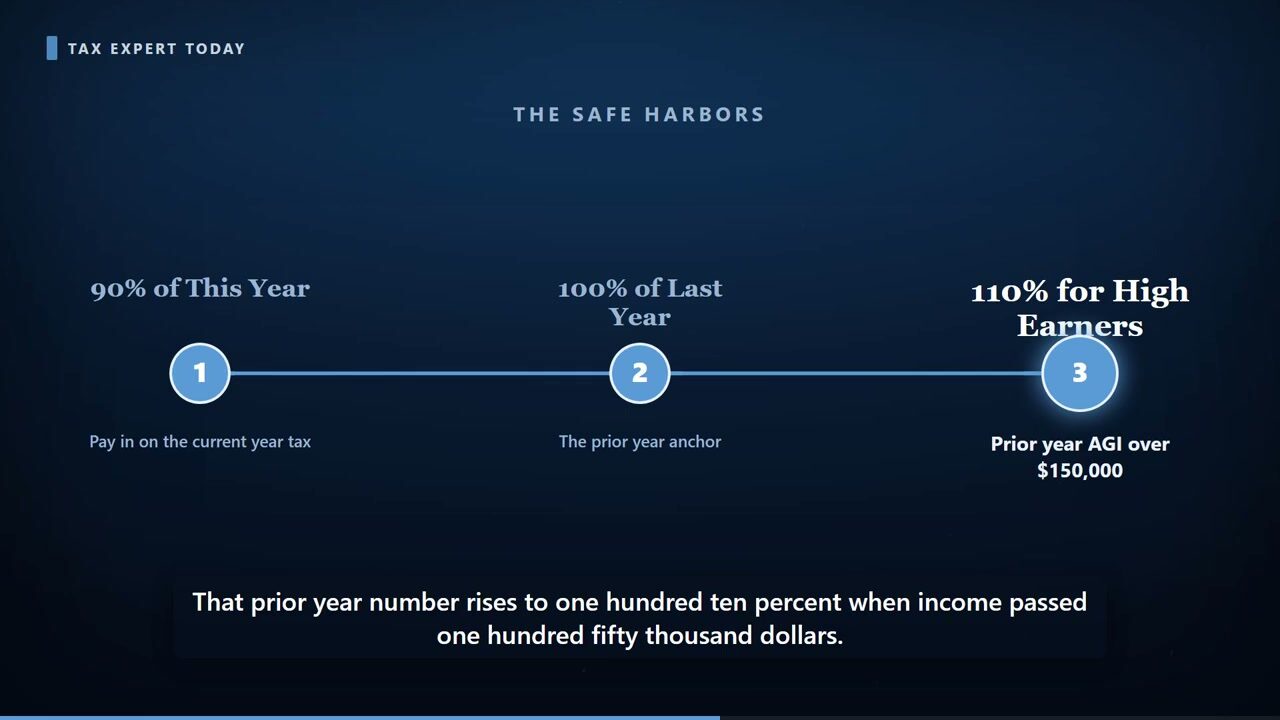
Households with volatile income, large Q4 bonuses, vesting equity, or a big capital gain from a sale should revisit their safe-harbor estimated tax payments with a CPA before year-end rather than assuming they can true up in April. Extension filers carrying a balance may find it worth discussing whether to pay down the balance now rather than waiting for the October 15 deadline, since interest and the failure-to-pay penalty accrue from the original due date regardless of the extension.
What to watch
The rate resets again for the first quarter of 2027 based on short-term rates determined in October 2026. If the Federal Reserve continues cutting short-term rates, the underpayment rate could ease slightly, but it has moved only in half-point steps historically and shows no sign of falling below the mid-single digits soon.
Sources
After TAX is an independent publication. Articles are general information, not tax, legal or investment advice. Consult a licensed professional about your situation.