The IRS said on August 24, 2026, that it will permanently retire FIRE, the Filing Information Returns Electronically system it has used for decades to collect 1099s, W-2Gs and similar filings, on November 19, 2026, shifting all electronic information-return filing to a newer platform called IRIS. Business owners, landlords, family offices and anyone else who files 1099s for contractors, vendors or investors needs a new IRIS account well before the cutoff, since the transition is not automatic.
What changed
Under IR-2026-99, the IRS laid out a sequence of hard deadlines: November 1, 2026 is the last day to submit test files through the FIRE Trading Partner Test System; November 9, 2026 is the last day to make changes to an existing IR Application for a Transmitter Control Code (TCC); and FIRE stops accepting any submissions at all after 3 p.m. ET on November 19, 2026. From that point forward, IRIS is the only electronic system the IRS will accept for current-year filings, prior-year filings, and corrections, starting with returns for the 2026 tax year that get filed in early 2027.
Who is affected
The rule that forces the issue is the electronic-filing mandate: any filer required to submit 10 or more information returns in total, aggregating across all form types, must file electronically rather than on paper. That threshold, lowered a few years ago from 250 returns, sweeps in a large number of small business owners, real estate investors with multiple contractors, and family offices issuing 1099s to advisors, staff and vendors, groups that may not have thought of themselves as high-volume filers under the old rule.
The after-tax math
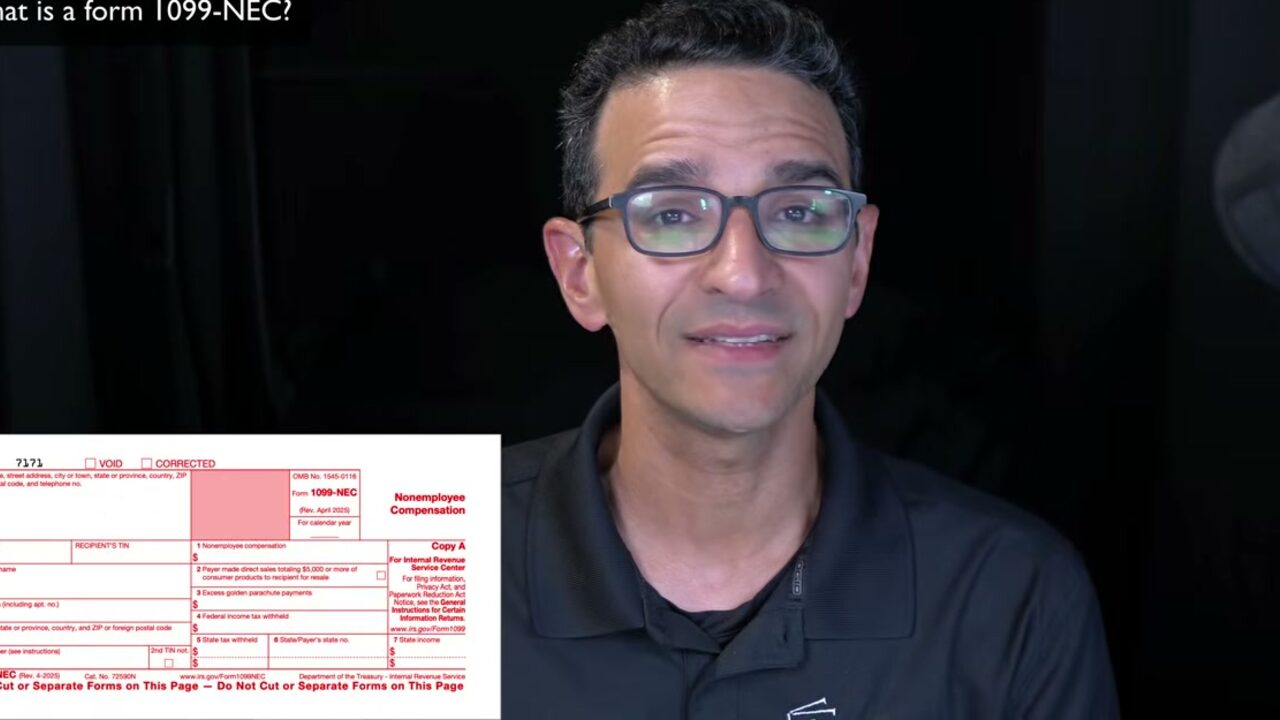
The transition itself carries no direct tax cost, but the operational risk does. Example: a business owner who issues 40 Form 1099-NEC filings to contractors and misses the FIRE cutoff without an IRIS TCC in hand faces a choice between late electronic filing, which the IRS treats as a failure to timely file, or paper filing that likely violates the 10-return electronic mandate. Penalties for late or incorrect information returns range from $60 to $340 per form depending on how late the correction comes, capped annually, but rise sharply, to $680 per form with no cap, for intentional disregard of the filing requirement. On 40 forms, even the modest tier adds up to $2,400 to $13,600 in penalty exposure that a timely IRIS registration avoids entirely.
Moves to discuss with your advisor
Owners who currently file through FIRE, or whose bookkeeper or payroll provider files on their behalf, should confirm now, not in November, that an IRIS Transmitter Control Code application is underway, since the IRS has said the credentialing process takes time and involves identity verification. Households and family offices that outsource 1099 preparation should ask their CPA or payroll vendor directly whether the vendor's own systems have completed the IRIS transition, rather than assuming it is handled.
Why family offices and real estate investors get caught off guard
The 10-return aggregation rule is easy to miss because it counts every information return type together, not just 1099-NEC forms for contractors. A family office that files a handful of 1099-DIV forms for trust beneficiaries, a few 1099-MISC forms for advisors, and a couple of 1099-INT forms for family loans can cross the 10-return electronic-filing threshold without issuing a single traditional contractor payment. Real estate investors with several rental properties often hit the same threshold once property managers, contractors and utility reimbursements are all counted, even if each individual vendor relationship looks small.
What to watch
Because FIRE TCCs do not carry over to IRIS, every filer needs a new application regardless of filing history, and the IRS has signaled it expects a surge of last-minute applications as the November deadline nears. Filers who wait until October or November risk being caught without valid electronic-filing credentials for the January 2027 filing season.
Sources
- First reported IR-2026-99: IRS reminder: Information return e-file system transitioning to a new platform — IRS
- Filing Information Returns Electronically (FIRE) — IRS
- August 2026 Tax News Roundup — Reed Corporation CPA
- Projected 2026 IRS Penalty Amounts For Late Returns And Missed Forms — Forbes
After TAX is an independent publication. Articles are general information, not tax, legal or investment advice. Consult a licensed professional about your situation.