The Treasury Department and IRS proposed regulations on August 26, 2026, that would replace the long-standing "last day" rule for taxing U.S. owners of controlled foreign corporations (CFCs) with a daily proration method, following a statutory change enacted in last year's tax law. The shift closes a well-known planning technique and changes how founders, family offices and private equity investors need to time the sale or restructuring of an offshore subsidiary.
What changed
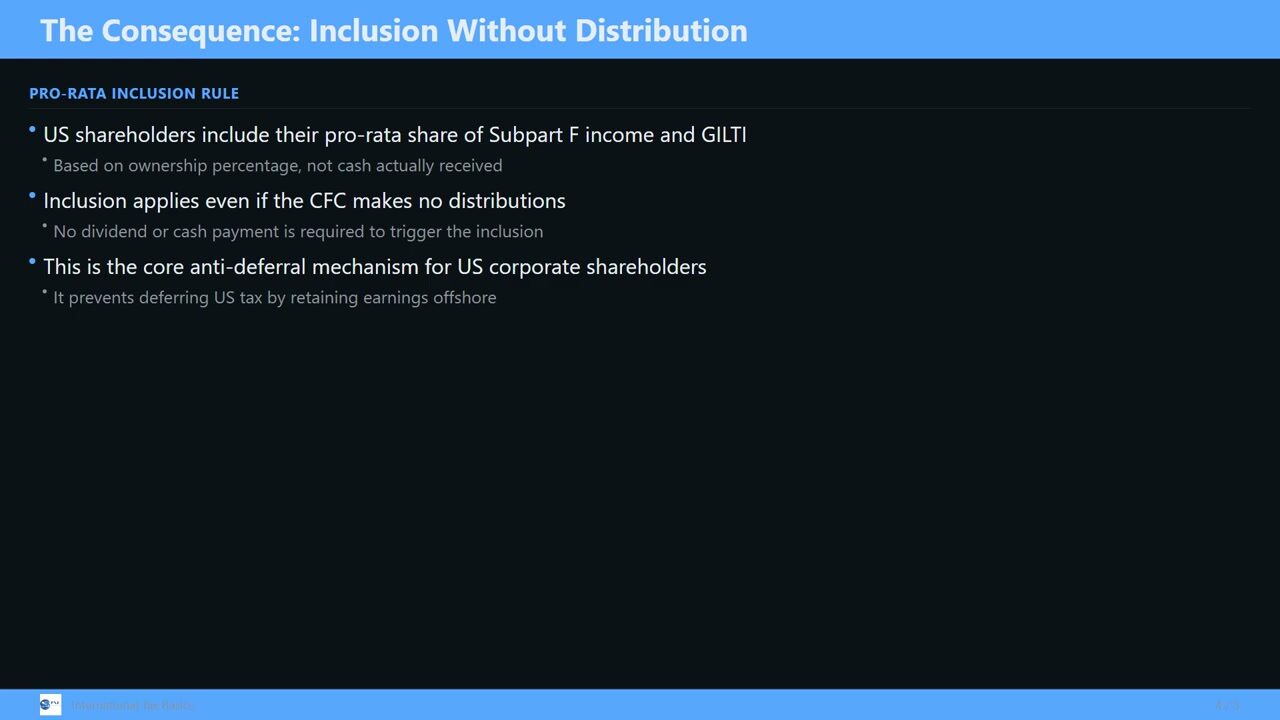
Under prior law, a U.S. shareholder owed tax on its pro rata share of a CFC's subpart F income or GILTI-style tested income only if it still owned the stock on the last day of the foreign corporation's tax year. Sell the stock a day before year-end, and the seller's allocable share of that year's income could effectively escape U.S. inclusion, a mismatch Congress closed in the One, Big, Beautiful Bill Act. The proposed regulations implement the statutory fix: a U.S. shareholder who owned CFC stock on any day during the year must include a pro rata share, generally calculated by multiplying the CFC's income for the year by the shareholder's ownership percentage and by the fraction of days in the year the shares were actually held.
Who is affected
The rule reaches any U.S. person, individual or entity, who owns 10% or more of a foreign corporation that qualifies as a CFC, a structure common among founders with offshore operating subsidiaries, private equity funds with foreign portfolio companies, and family offices holding foreign investment vehicles. It matters most in any year involving a sale, restructuring, liquidation, or change in ownership percentage of the foreign entity partway through the year, since those are exactly the transactions the old last-day rule allowed shareholders to time around. The proposed rules also specify a technical but consequential detail: the day a buyer acquires CFC stock is excluded from that buyer's ownership period, while the day a seller disposes of the stock is included in the seller's period, so the two parties' fractional-day counts do not simply add up to a clean handoff.
The after-tax math
The mechanical change matters even without any tax planning intent. Example: a U.S. founder who owns 100% of a profitable foreign subsidiary and sells the entire stake exactly halfway through the CFC's tax year would, under the new daily proration rule, include roughly half of that year's subpart F or tested income on the final return before the sale, income that a same-day-before-year-end sale under the old last-day rule might have avoided entirely. If that half-year income allocation is $2 million and falls under GILTI-style treatment taxed near the high-income individual rate, the daily proration rule can turn what used to be a clean exit into a meaningful, unavoidable current-year tax bill on income the seller no longer benefits from going forward.
Moves to discuss with your advisor
Owners of foreign subsidiaries who are contemplating a sale, spin-off, or ownership restructuring should model the deal's timing against the proposed daily proration rule with international tax counsel well before signing, since the tax cost of a mid-year transaction is now baked into the sale economics rather than something a closing-date choice can eliminate. The rule applies to CFC tax years beginning after December 31, 2025, so transactions already completed in earlier years are not affected. Owners should also expect more complex year-of-sale tax reporting generally: rather than a single clean allocation, both buyer and seller now need to track exact holding-period days and coordinate their respective pro rata calculations, likely requiring closer cooperation between the parties' tax advisors at closing than the old rule demanded.
What to watch
The regulations are proposed, not final, and Treasury has invited public comments before finalizing the rule; the proposal also incorporates a transition rule first previewed in Notice 2025-75. Business owners and fund sponsors with pending or planned CFC transactions should watch for the final regulations and any changes made in response to industry comments before locking in deal timing.
Sources
- First reported Pro Rata Share of Subpart F Income, Tested Income, or Tested Loss (REG-115646-25) — Federal Register
- Proposed regulations: Guidance under section 951(a) on pro rata share of subpart F income — KPMG
- Pro Rata Share Determinations Under the One, Big, Beautiful Bill Act — Current Federal Tax Developments
After TAX is an independent publication. Articles are general information, not tax, legal or investment advice. Consult a licensed professional about your situation.