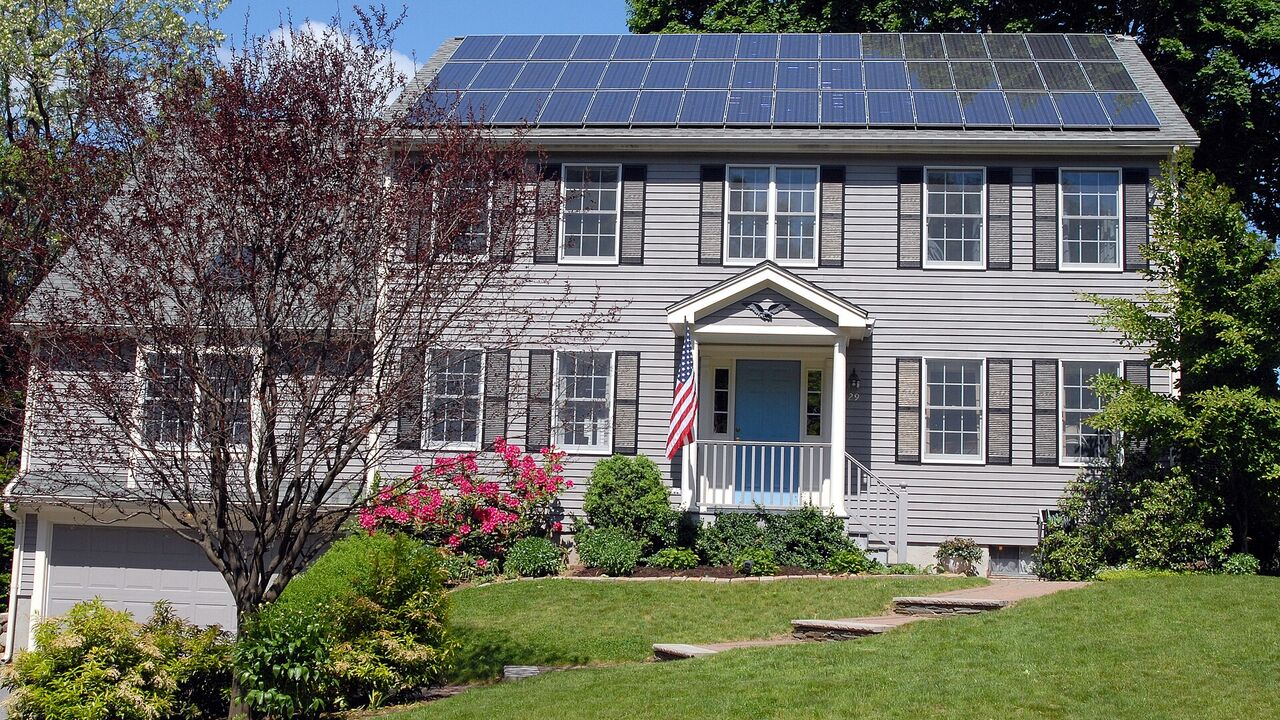
The July tax law cut short several clean-energy tax breaks that affluent households have used to offset the cost of electric vehicles, rooftop solar and home upgrades. On August 21, 2025, Treasury and the IRS published FAQs spelling out exactly when each credit ends and what counts as qualifying in time. The answers differ in ways that matter for anyone with a purchase or installation in progress.
What changed
According to the IRS FAQs, the termination dates are:
| Provision | Ends for |
|---|---|
| New clean vehicle credit (30D) | Vehicles acquired after Sept. 30, 2025 |
| Previously owned clean vehicle credit (25E) | Vehicles acquired after Sept. 30, 2025 |
| Commercial clean vehicle credit (45W) | Vehicles acquired after Sept. 30, 2025 |
| Energy efficient home improvement credit (25C) | Property placed in service after Dec. 31, 2025 |
| Residential clean energy credit (25D) | Expenditures made after Dec. 31, 2025 |
| Alternative fuel refueling property credit (30C) | Property placed in service after June 30, 2026 |
| New energy efficient home credit (45L) | Homes acquired after June 30, 2026 |
| Commercial buildings deduction (179D) | Construction beginning after June 30, 2026 |
The rules that decide eligibility
Vehicles: contract plus payment
For the vehicle credits, the IRS treats a car as acquired when a written binding contract is entered into and a payment has been made. A buyer who signs and pays by September 30 can still claim the credit even if the vehicle is delivered later; the credit is claimed for the year the vehicle is placed in service.
The new clean vehicle credit is worth up to $7,500, but only $3,750 if a vehicle meets just one of the critical mineral and battery component tests, according to the IRS. Income limits have always excluded many high earners: modified AGI cannot exceed $300,000 for joint filers. MSRP caps of $80,000 for vans, SUVs and pickups and $55,000 for other vehicles also apply.
Home projects: installation, not payment
For the home improvement and residential clean energy credits, the deciding event is completion of installation. An expenditure is treated as made when installation is complete, so a deposit paid in 2025 for solar panels installed in January 2026 does not qualify. That is the opposite of the vehicle rule, and it is where homeowners are most likely to be caught out.
Who is affected
The residential clean energy credit is the largest for high-income homeowners because it has no income limit and no annual dollar cap for solar, wind, geothermal heat pumps and battery storage of at least 3 kilowatt hours, per the IRS. It is nonrefundable, but unused amounts can carry forward. The home improvement credit is smaller: 30% of qualified costs up to $3,200 a year, with a $2,000 limit for heat pumps and certain water heaters and $1,200 for other improvements. It cannot be carried forward.
The after-tax math
Example: a family installs a $60,000 solar-and-battery system on its primary home. If installation is finished by December 31, 2025, the 30% credit is $18,000, reducing federal tax dollar for dollar. If the crew finishes in January 2026, the credit is zero, and the net cost rises from $42,000 to $60,000. Rebates and utility subsidies reduce the cost basis used for the credit.
Example: a couple with $280,000 of modified AGI signs a contract and pays a deposit on a qualifying $50,000 SUV on September 25, taking delivery in October. They can still claim up to $7,500. The same couple at $320,000 would not qualify regardless of timing.
What to consider
- Installer schedules. Solar and heat pump projects commonly take months from contract to completion; households often confirm written completion dates.
- Paperwork. Dealers must report qualifying sales to the IRS, and buyers file Form 8936; home credits go on Form 5695.
- Second homes and rentals. The home improvement credit applies only to a primary residence, and landlords who do not live in the property cannot claim it.
What to watch
Expect a rush of vehicle contracts through September 30 and installer backlogs into December. Homeowners with projects straddling year-end may want to discuss with a tax adviser how the completion rule applies to their specific contract.
Sources
- First reported Treasury, IRS issue FAQs to address the accelerated termination of several energy provisions under OBBB (IR-2025-86) — IRS
- FAQs for modification of sections 25C, 25D, 25E, 30C, 30D, 45L, 45W, and 179D under the One, Big, Beautiful Bill Act — IRS
- Credits for new clean vehicles purchased in 2023 or after — IRS
- Residential Clean Energy Credit — IRS
- Energy Efficient Home Improvement Credit — IRS
After TAX is an independent publication. Articles are general information, not tax, legal or investment advice. Consult a licensed professional about your situation.