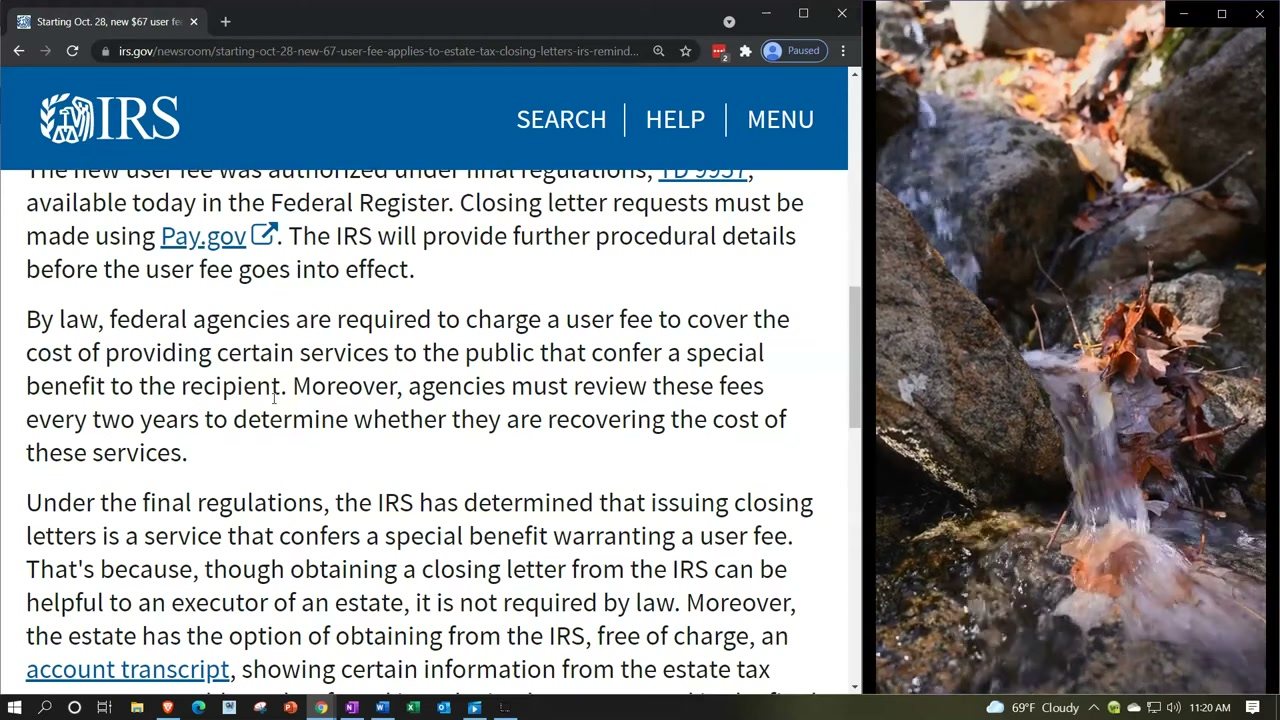
The IRS on December 1, 2025 published final regulations permanently setting the user fee for an estate tax closing letter at $56, down from $67, ending any question that the lower price from an interim rule could be reversed. The fee applies to Letter 627, the document executors request to confirm the IRS has finished with an estate tax return, and it has actually been in effect for requests filed on or after May 21, 2025. The December notice makes that reduction final, just as executors of estates from wealthy 2025 decedents start moving through the filing and audit process.
What Letter 627 actually does
An estate tax closing letter tells an executor, heirs and any probate court that the IRS has accepted an estate tax return as filed or has finished an examination of it. In practice it serves as written evidence that the federal estate tax side of an estate is closed, which executors often want in hand before making final distributions to heirs.
Who needs to pay, and who can skip it
Not every estate has to pay for Letter 627. The IRS lets authorized representatives request a free account transcript instead, using Form 4506-T, and check for transaction code 421, which shows the return was accepted or an examination closed. For estates that want the more formal, signed letter, however, the fee is charged per request through Pay.gov, and the IRS says processing typically takes about three weeks after payment. The $11 reduction is not life-changing money for a family settling a multimillion-dollar estate, but it does affect estates that file for several related entities or that had to resubmit a request after an error.
How the fee has moved
The fee an estate pays depends on when the IRS receives the request, not on the date of death or the date the estate tax return was filed.
| Request received | User fee for Letter 627 | Status |
|---|---|---|
| Before May 21, 2025 | $67 | Prior fee |
| On or after May 21, 2025 | $56 | Set by interim rule, finalized December 1, 2025 |
| Account transcript via Form 4506-T | No fee | Accepted by the IRS in lieu of the letter |
The IRS FAQ suggests pulling the account transcript first. If it already shows transaction code 421, the estate may not need the paid letter at all.
The after-tax context for high-net-worth families
The closing letter fee is a small administrative detail sitting inside a much larger 2025 and 2026 story: the federal estate tax exemption rose to $15 million per person for 2026 under the One, Big, Beautiful Bill Act. That means far fewer estates owe any federal estate tax at all, but the ones that do, or that simply want documented certainty, still move through the same closing-letter process. Example: an executor settling an $18 million estate for a person who died in 2025, with a taxable estate above the exemption, requests Letter 627 to confirm the IRS accepted the Form 706 and to give the estate's bank and title company the paperwork they want before releasing real estate and brokerage accounts to heirs. At $56 instead of $67, the fee is small next to the other costs of settling an estate that size, but the finalized, unchangeable rate lets estate planners quote it with confidence.
Why the finalization matters more than the number
Executors and estate attorneys had been operating under an interim final rule since May, which technically could have been modified after the IRS reviewed public comments. The December 1 notice adopts that interim rule without change, so families and their advisors now know the $56 figure is settled rather than provisional. For large or complex estates, particularly those with family businesses, closely held partnerships or property in multiple states, that certainty simplifies budgeting for the string of administrative fees, appraisal costs and filing fees involved in closing an estate.
What to watch next
The next practical test is service, not price: whether the IRS keeps closing-letter research near its stated three-week window as returns for 2025 deaths move through the system in 2026. Whether a formal letter is needed at all is often worth discussing with the estate's CPA or attorney, since the free transcript route avoids the fee entirely when the parties involved will accept it.
Sources
After TAX is an independent publication. Articles are general information, not tax, legal or investment advice. Consult a licensed professional about your situation.