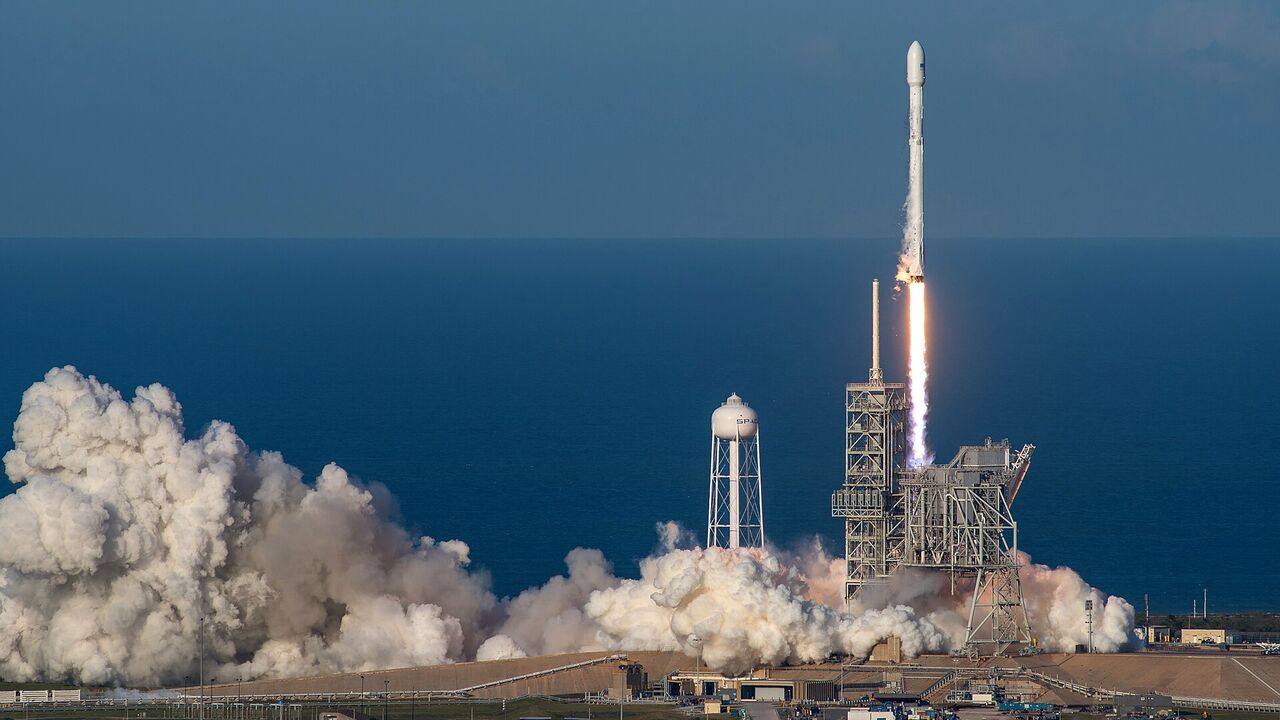
SpaceX priced its initial public offering at $135 a share on June 11, 2026, raising $75 billion in what several outlets, including TechCrunch, called the largest IPO in history. Shares began trading on the Nasdaq under the ticker SPCX the next day. For the thousands of current and former SpaceX employees holding restricted stock units, the pricing starts a tax clock that many will not fully appreciate until next April: the standard 22% federal withholding on RSU income covers only part of what higher earners will actually owe.
What changed
According to CoinDesk, the offering of roughly 555.6 million shares valued the company at close to $1.8 trillion on a fully diluted basis, surpassing Saudi Aramco's 2019 listing as the largest share sale on record. Employee RSUs that had been vesting for years without a public market to sell into now have a price attached to them, and many awards settle or become sellable around the time of listing or through the staggered early-release schedule SpaceX built into its lockup. RSU income is taxed as ordinary wages in the year the shares vest or settle, at the stock's value on that date, regardless of whether the employee sells.
Who is affected
Anyone whose RSUs vest at or after the IPO, in dollar terms tied to the $135 offer price or the trading price that follows, faces this issue. Employers are required to withhold RSU income as supplemental wages, which the IRS sets at a flat 22% up to $1 million and 37% above it. That rate was designed for typical bonus payouts, not for a single vesting event that can push someone's annual income into the top federal bracket. Employees living in California face an added layer: the state taxes wages up to a top marginal rate of 13.3%, and according to TrueRoot Financial, income sources to California based on where the work was performed, so employees who vested equity while living in the state can still owe California tax on that income even after relocating to a state such as Texas that has no personal income tax.
The after-tax math
An example with round numbers: an employee holds 1,000 RSUs that vest at $150 a share, the approximate level SPCX opened at on its first trading day. That is $150,000 of ordinary income. The employer withholds 22%, or $33,000. If the employee's actual marginal rate, once federal tax above the 22% bracket, California tax and Medicare surtaxes are added up, comes to roughly 45%, the real liability is about $67,500. The gap between what was withheld and what is owed is $34,500, due when the employee files the following spring, and research from Augustus Wealth describes this pattern as a routine shortfall of 20 to 30 percentage points for employees in high-tax states once income climbs into the higher brackets. Employees who cannot immediately sell shares to cover the gap because of lockup restrictions face a cash-flow problem on top of the tax problem.
Moves to discuss with your advisor
- Whether quarterly estimated tax payments are needed to avoid an underpayment penalty, given that payroll withholding alone may not cover the liability.
- How SpaceX's staggered lockup, which Darrow Wealth Management describes as releasing shares in tranches at roughly 70, 90, 105 and 120 days after listing plus larger releases tied to earnings, lines up with when tax payments come due.
- Whether prior-year California residency creates a state filing obligation even after a move to Texas or another no-income-tax state.
- Adjusting Form W-4 withholding on base salary to spread part of the shortfall across remaining pay periods in 2026.
What to watch
The staggered lockup structure means SpaceX employee shares will keep unlocking in batches over the second half of 2026, and each release could generate a fresh vesting or sale event with its own withholding shortfall. Households sitting on large unrealized gains once shares are sellable may also want to track SPCX's trading price relative to the $135 offer price, since a lower price at the time of an eventual sale changes both the gain calculation and the case for selling shares immediately upon vesting rather than holding them.
Sources
- First reported SpaceX officially prices shares at $135 in the largest IPO ever — TechCrunch
- SpaceX (SPCX) raises $75 billion in largest-ever IPO — CoinDesk
- SpaceX IPO Tax Impact Explained for Employees — Augustus Wealth
- SpaceX IPO: Employee Lockup Release Dates — Darrow Wealth Management
- SpaceX IPO Equity Planning: RSUs, Options, ISO, Taxes & Lock-Up Guide — TrueRoot Financial
After TAX is an independent publication. Articles are general information, not tax, legal or investment advice. Consult a licensed professional about your situation.