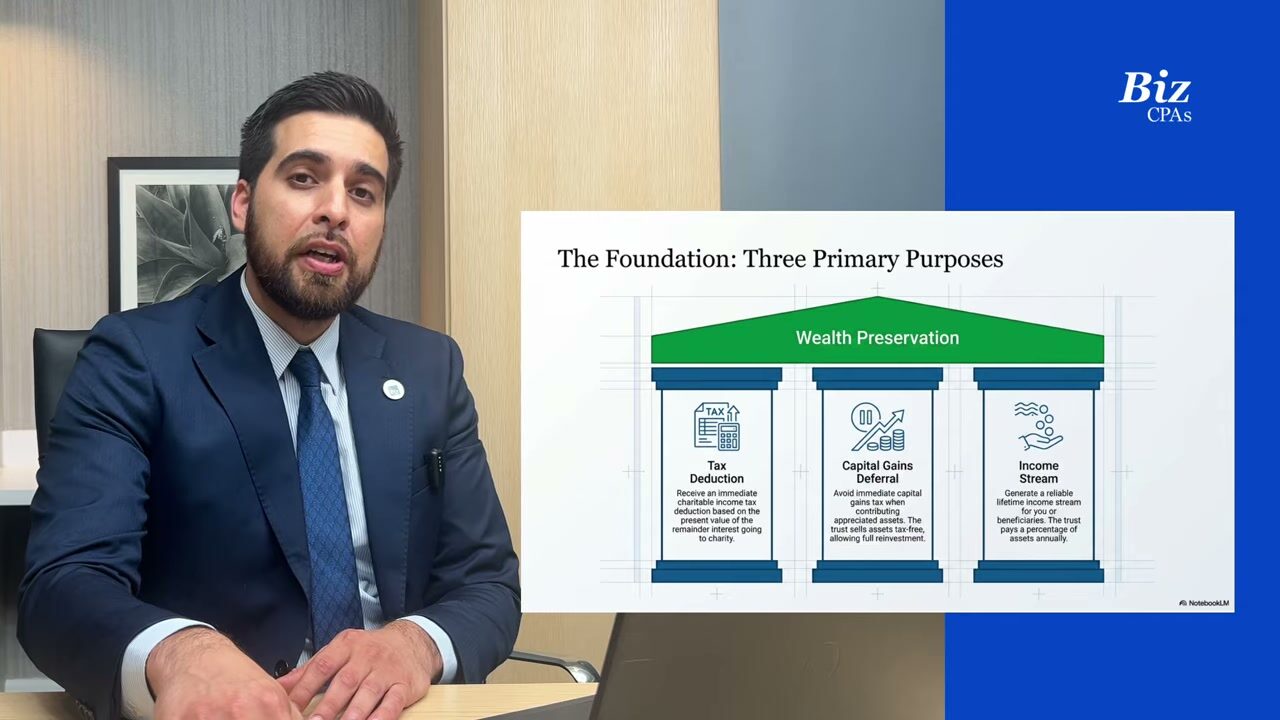
A strategy marketed to business owners as a way to sell appreciated property and collect the proceeds largely tax-free is now formally a listed transaction. On July 8, 2026, the Treasury Department and the IRS issued final regulations identifying certain arrangements built on charitable remainder annuity trusts, or CRATs, as abusive. The rules, published as T.D. 10051, took effect when they appeared in the Federal Register on July 9.
What changed
The IRS first proposed the listing on March 25, 2024. According to KPMG, the final regulations adopt that proposal without change. Once a transaction is listed, material advisors and certain participants must file disclosure statements with the IRS, on Form 8886 for participants and Form 8918 for material advisors, and penalties apply for failing to disclose. The designation also covers transactions that are "substantially similar," a phrase the IRS reads broadly.
How the strategy works
The transaction the regulations describe has a set sequence:
- An owner creates a trust meant to qualify as a CRAT under section 664(d)(1) and funds it with appreciated property, often a business interest or business assets.
- The trustee sells that property.
- The trust uses the proceeds to buy a single premium immediate annuity from an insurance company.
- The beneficiary treats each annuity payment under the section 72 annuity rules, reporting only the small income portion of each payment as taxable.
The problem, in the government's view, is step four. Payments from a charitable remainder trust are governed by section 664(b), which requires them to carry out the trust's ordinary income and capital gains first. By relabeling the payments as ordinary annuity distributions, participants claimed to avoid tax on the very gain the trust realized when it sold the business.
The after-tax math
Example: an owner with a near-zero basis contributes a $5 million business interest to a trust, which sells it and buys an annuity. Under the correct rules, the $5 million gain does not disappear. It flows out to the beneficiary as the annuity payments are made. At the 20% top capital gains rate plus the 3.8% net investment income tax, that gain represents about $1.19 million of federal tax spread over the payout years.
| Treatment of $5 million gain | Federal tax on the gain |
|---|---|
| Payments reported under section 664(b) tiers | About $1.19 million over the payout term |
| Payments reported under section 72 as claimed by promoters | Only the annuity's income element taxed |
The gap between those two lines is what the IRS says it will pursue, along with the disclosure penalties that now attach to participation.
Who is affected
Treasury estimates 50 to 100 taxpayers a year will be touched by the rules. The number is small, but the typical participant is not: a founder or family selling a company, farm or large block of appreciated stock. During the comment period, a commenter raised the position of charities, which often explain how CRATs work to prospective donors. Providing general information about a CRAT, by itself, is not the conduct the regulations target.
Legitimate charitable remainder trusts are unaffected. KPMG notes that only CRATs matching the listed characteristics are covered. A trust that sells contributed property, reinvests the proceeds and pays the beneficiary under the ordinary section 664 tier rules is still a recognized planning tool, and it still leaves a remainder for charity.
Moves to discuss with your advisor
Owners who already entered a CRAT that bought an annuity often start by gathering the trust documents, the annuity contract and past returns to see whether the arrangement matches the listed elements. Those planning a sale may want to ask any adviser proposing a charitable trust how payments will be reported and whether the adviser expects to file as a material advisor. Given the penalty exposure, these are questions for a tax attorney and a CPA who are independent of the promoter.
What to watch
With the listing final, expect IRS examinations of prior-year returns that reported CRAT annuity payments under section 72, and continued attention to substantially similar variations. The IRS framed the rules as part of a broader campaign, saying it will continue to combat abusive tax shelters and transactions.
Sources
- First reported IR-2026-82: Treasury, IRS issue final regulations naming certain charitable remainder annuity trust transactions as listed transactions — IRS
- Charitable Remainder Annuity Trust Listed Transaction (T.D. 10051) — Federal Register
- Final regulations: CRAT transactions identified as listed transactions — KPMG
- Net Investment Income Tax — IRS
After TAX is an independent publication. Articles are general information, not tax, legal or investment advice. Consult a licensed professional about your situation.