Beginning Jan. 1, 2026, a SECURE 2.0 provision changed how many older, higher-paid workers make 401(k) catch-up contributions. Under the rule, employees age 50 and older whose prior-year wages from the same employer exceeded $150,000 must make those catch-up contributions on a Roth basis, which means the extra deferral no longer reduces current federal taxable income, according to 24/7 Wall St.
The change was enacted in 2022, was originally scheduled for 2024, and was delayed before taking effect in 2026. For affected households, the practical shift is straightforward: the same savings can still go into the plan, but the tax treatment of that catch-up slice is now different.
What Changed
The new rule applies only to catch-up contributions, not the regular elective deferral limit. For 2026, the regular 401(k) deferral cap is $24,500. On top of that, the catch-up amount is $8,000 for workers ages 50 to 59 and age 64 or older, and $11,250 for workers ages 60 to 63, according to 24/7 Wall St. That means a 55-year-old who maxes out both limits could contribute a total of $32,500 in 2026.
Before this change, catch-up contributions could reduce current taxable income if made on a traditional pretax basis. Now, for workers above the wage threshold, the catch-up portion must go to the Roth side of the plan. That eliminates the upfront deduction on that amount, even though the contribution still counts toward retirement savings.
The source also reported that the threshold was originally $145,000 and now adjusts annually for inflation. For 2026, the operative figure is $150,000.
Who Is Affected
The rule is narrower than a headline about “$150,000 earners” may suggest. It applies only if prior-year wages from the same employer exceeded $150,000. The measurement is tied to W-2 wages from that employer, not total household income.
That distinction matters for executives, professionals and business owners with multiple income streams. According to the report, side-gig earnings and partnership distributions do not count toward the $150,000 test. The relevant figure is the Social Security wages amount on the worker’s 2025 W-2.
There is also an employer-specific wrinkle. A worker who started with a new employer in 2026 generally is not subject to the rule this year because there was no W-2 income from that employer in 2025. In other words, two workers with similar compensation could be treated differently in 2026 depending on whether they changed jobs.
The rule can also create an operational issue at the plan level. If an employer’s 401(k) plan does not offer a Roth option, then workers above the threshold cannot make catch-up contributions to that plan at all. The regular $24,500 deferral still remains available, but the extra $8,000 or $11,250 catch-up amount is unavailable until the plan offers a Roth feature. 24/7 Wall St. said about 96% of 401(k) plans offered Roth accounts in 2024, and the Plan Sponsor Council of America expects the current figure is very close to 100%.
The After-Tax Math
The tax effect is immediate because the catch-up contribution no longer lowers current taxable income for affected workers. 24/7 Wall St. cited examples first discussed by The New York Times showing how that can change a worker’s federal tax bill.
| Example | 2026 catch-up amount | Prior treatment | Estimated federal tax effect |
|---|---|---|---|
| Age 55, 24% bracket | $8,000 | Pretax catch-up reduced taxable income | About $1,900 less in federal tax under old rules |
| Age 62, 24% bracket | $11,250 | Pretax super catch-up reduced taxable income | About $2,700 less in federal tax under old rules |
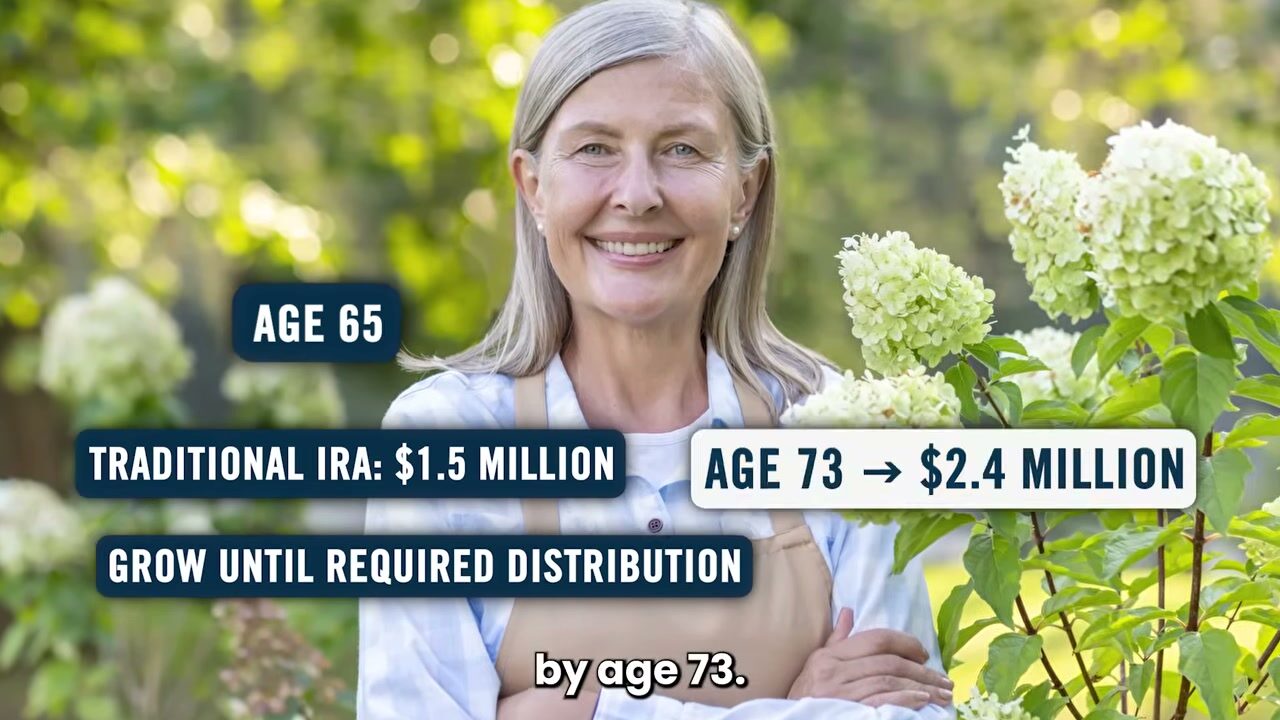
Under the new rule, those same catch-up dollars are included in taxable income today because they must be contributed as Roth. The tradeoff is on the back end: qualified Roth distributions in retirement can be tax-free if the account holder is at least age 59½ and the funds have been in the account for at least five years. The report also noted that since 2024, Roth 401(k)s no longer have required minimum distributions at a certain age, unlike traditional balances that face RMDs at 73.
What Workers May Want to Check Now
For affected households, the immediate question is not whether the law exists, but whether payroll and plan elections are handling it correctly. Some employers automatically redirect contributions above the regular deferral limit into the Roth bucket. Others require employees to affirmatively elect Roth treatment for the catch-up amount. If the plan uses the second approach and the worker has not made that election, the catch-up contribution may not be happening.
Households in this situation may want to confirm three items with HR or the plan administrator:
- whether 2025 Social Security wages from that employer exceeded $150,000,
- whether the plan offers a Roth 401(k) feature, and
- whether a separate election is required for catch-up contributions to continue.
Workers who have historically counted on the deduction may also need to revisit withholding or estimated payments. Using the examples above, losing a roughly $1,900 or $2,700 federal tax reduction can change year-end cash flow, particularly for households already managing bonus income, equity compensation or other variable earnings.
What to Watch Next
The main issue from here may be administration rather than policy. The rule is already in effect, so the next round of confusion is likely to center on payroll systems, plan design and whether workers realize their catch-up election changed in practice. That is especially relevant late in the year, when many employees accelerate deferrals to hit annual limits.
The threshold also adjusts for inflation, so the income level that triggers mandatory Roth catch-up treatment may change in future years. For now, the 2026 number is $150,000, measured using prior-year wages from the same employer. For workers age 50 and older who are still maximizing retirement plan contributions, that means the catch-up portion may now create a higher current tax bill while preserving tax-free treatment later if distribution rules are met.
Sources
After TAX is an independent publication. Articles are general information, not tax, legal or investment advice. Consult a licensed professional about your situation.