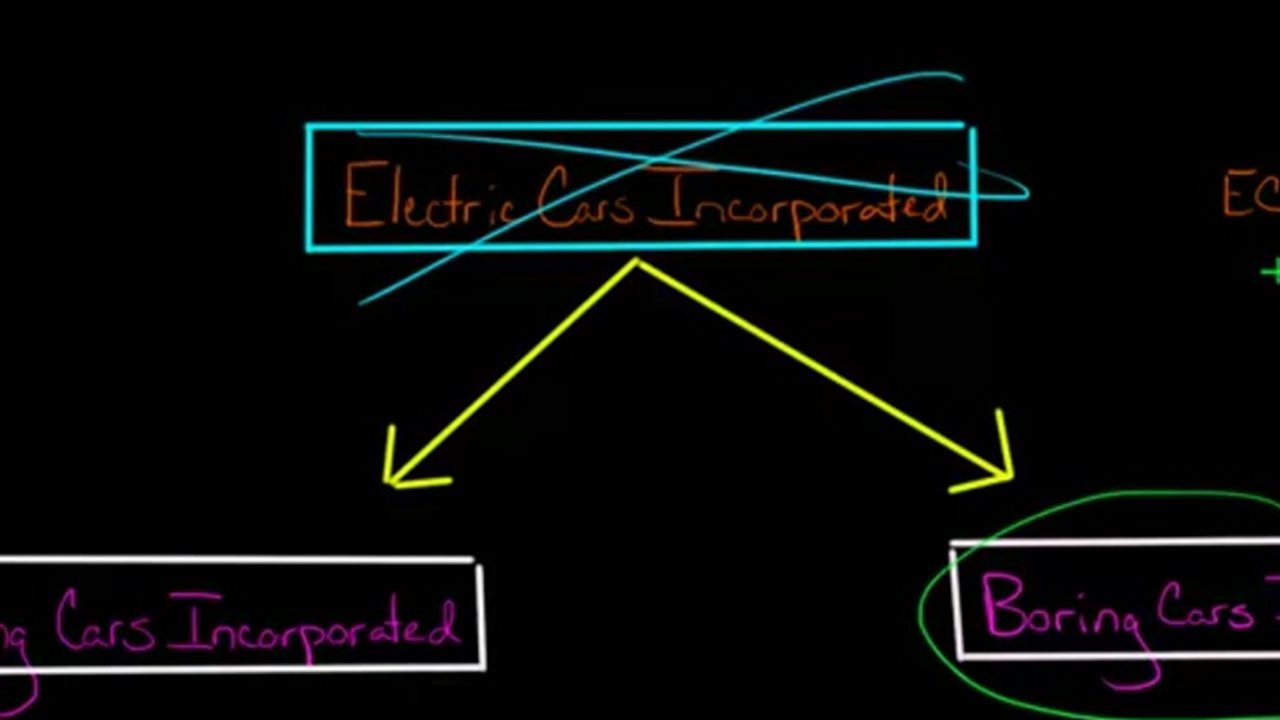
The IRS on September 30, 2025 withdrew two sets of proposed regulations that would have reshaped how companies qualify for tax-free spin-offs, split-offs and similar corporate separations, according to The Tax Adviser. For owners of closely held and family businesses who have been weighing whether to divide a company along family or business lines, the withdrawal removes a set of proposed restrictions that had been hanging over that planning since January 2025.
What changed
The withdrawn package included proposed regulations under Internal Revenue Code Sections 355, 357, 361 and 368 (REG-112261-24), which would have added new conditions to the rules governing tax-free corporate separations, and a companion proposal (REG-116085-23) that would have required multiyear reporting from taxpayers claiming nonrecognition treatment on a separation. Both were published as proposed rules in January 2025. The IRS said it withdrew them after receiving comments that were generally critical of the approach. At the same time, the agency issued Rev. Proc. 2025-30, effective September 29, 2025, updating the procedures for requesting a private letter ruling on a Section 355 transaction, a sign that the IRS is not stepping back from the area entirely, only from this particular set of proposed rules.
Who is affected
Section 355 is the provision that allows a corporation to distribute stock of a subsidiary to its shareholders without triggering immediate tax at either the corporate or shareholder level, provided a list of technical requirements is met: a genuine business purpose, both companies conducting an active trade or business for at least five years, and the transaction not being used principally as a way to distribute earnings. Family and closely held businesses use this structure to separate operating divisions, resolve disputes among siblings or branches of a family who want to run different parts of a business independently, or carve out a unit ahead of a sale. Because the withdrawn proposals would have added new tests and documentation burdens, companies already in the middle of a separation, or in the early planning stages, are the ones most directly affected by the reversion to prior law.
The after-tax math
Example: a family owns an operating company worth $40 million that includes a manufacturing division and a real estate division, and the two branches of the family want to go their separate ways. Under a qualifying Section 355 spin-off, the real estate division can be distributed into a new company owned by one branch, with no corporate-level tax and no immediate tax to the shareholders receiving the new stock. If the same division were instead sold outright for $15 million with a $5 million tax basis, the company could owe corporate-level tax on the $10 million gain, plus a second layer of tax when proceeds are distributed to shareholders, a combined burden that can easily exceed $4 million to $5 million depending on the state and the shareholders' rates. That double-tax comparison is why qualifying for Section 355 treatment, rather than falling short of it on a technicality, matters so much to owners doing this kind of planning.
Moves to discuss with your advisor
Business owners already structuring a separation may want their tax counsel to revisit any changes made to a transaction's design in anticipation of the withdrawn proposals, since some of those adjustments may no longer be necessary. Because the rules governing an active trade or business, the five-year holding requirement and business-purpose documentation have not changed, families early in the process still benefit from building a clear paper trail showing a non-tax business reason for the split. Given that the IRS also updated its private letter ruling procedures the same week, owners of larger or more complex separations may want to discuss with their advisor whether seeking a ruling in advance is worth the time and cost for additional certainty.
What to watch
The IRS withdrew the proposals rather than replacing them, so the underlying policy questions about spin-offs used mainly to shed unwanted assets or to facilitate a later sale are likely to resurface in some form. Whether Treasury issues a narrower, less burdensome replacement proposal, and how actively the IRS uses the revised private letter ruling process in the meantime, will shape how much certainty owners of family and closely held companies have when planning a separation over the next year or two.
Sources
- First reported IRS withdraws prop. regs. affecting corporate spinoff transactions — The Tax Adviser (AICPA)
After TAX is an independent publication. Articles are general information, not tax, legal or investment advice. Consult a licensed professional about your situation.