The Internal Revenue Service said on August 7, 2025, that it will not change Form W-2, existing Forms 1099, Form 941 or federal income tax withholding tables for tax year 2025 to reflect the July tax law. The announcement means paychecks for the rest of the year will be withheld as if the law had not passed, and the changes will show up only when households file their 2025 returns.
What changed
In IR-2025-82, the agency told employers and payroll providers to keep using current reporting and withholding procedures. The IRS said it wanted to avoid disruption during the filing season and give businesses, tax professionals and its own staff time to implement the changes properly. New guidance and updated forms are being developed for tax year 2026, and more detail on how taxpayers can claim the new benefits for 2025 is expected in the coming months.
The decision was aimed most directly at the new deductions for tips and overtime, which run from 2025 through 2028. As the Tax Adviser notes, the overtime deduction is worth up to $12,500, or $25,000 on a joint return, and the tips deduction up to $25,000, with employers allowed to use any reasonable method to estimate designated tips for 2025. Because W-2s will not separately report those amounts this year, workers will need other records to support the deductions.
Who is affected
High earners will mostly not qualify for tips or overtime relief. The Tax Adviser reports that the overtime deduction phases out above $150,000 of modified adjusted gross income, or $300,000 for joint filers. For affluent households, the more relevant point is broader: withholding tables will not account for any provision of the new law in 2025.
The largest change for many high-income families in high-tax states is the state and local tax deduction cap, which rises to $40,000 for 2025, according to a Venable analysis, with a phase-down that begins at $500,000 of modified AGI and stops at a $10,000 floor. Paycheck withholding was calibrated to the old $10,000 cap.
The after-tax math
Example: a married couple in New York earns $400,000 in wages, pays $45,000 in state income and property taxes, and itemizes. Under the old rules they could deduct $10,000 of those taxes; for 2025 they can deduct $40,000. That is $30,000 of additional deductions. At an assumed 32% marginal rate, used here for illustration, their 2025 federal tax falls by about $9,600. Their withholding will not reflect that, so unless they adjust, the savings will arrive as a larger refund in 2026 rather than in their paychecks this year.
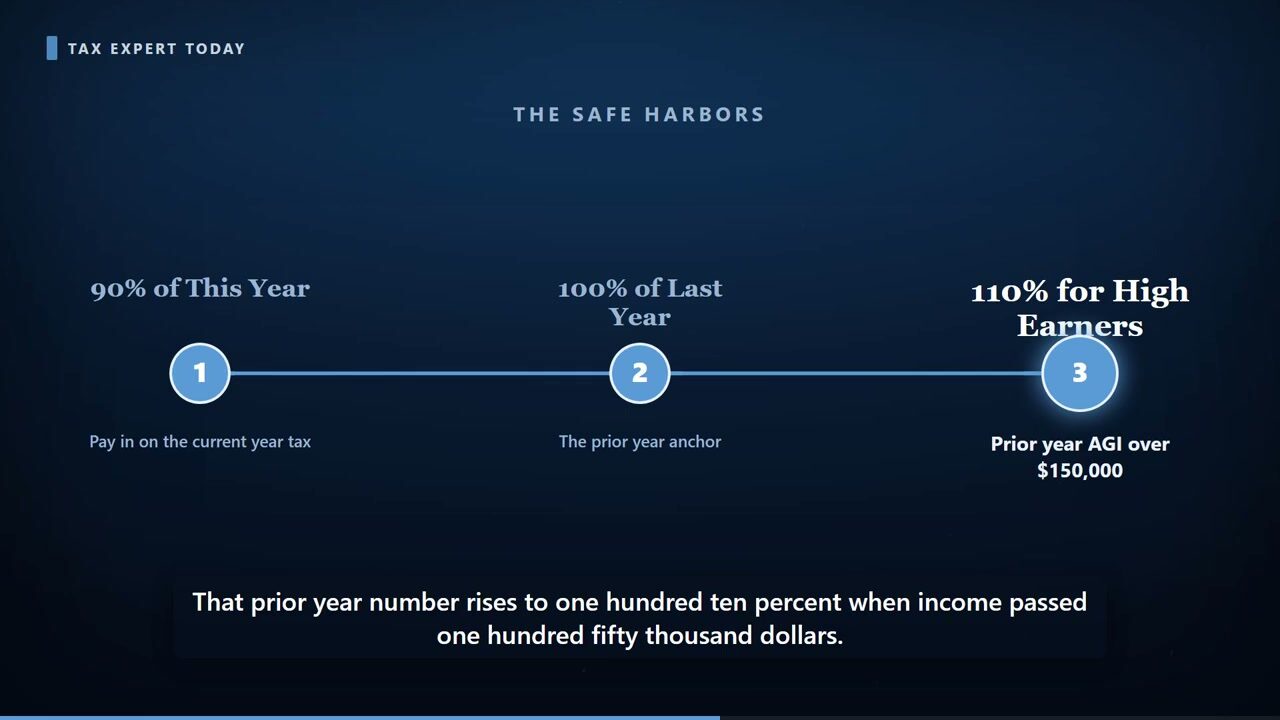
The reverse can also happen. A household with income that pushes it through the SALT phase-down, or with large equity compensation that is withheld at a flat supplemental rate, may find its withholding too low. The IRS generally avoids an underpayment penalty for taxpayers who pay in at least 90% of the current year's tax or 100% of the prior year's tax, but taxpayers with adjusted gross income above $150,000 must meet a 110% prior-year test, according to IRS Topic 306. Taxpayers whose income arrives unevenly can use the annualized installment method on Form 2210.
Moves to discuss with your advisor
- A midyear projection. Running 2025 numbers under the new law, including the SALT phase-down and any equity vesting, shows whether withholding is on track.
- Form W-4 or estimate adjustments. Households expecting a large refund sometimes reduce withholding for the remaining pay periods; those expecting a balance due often increase withholding or a fourth-quarter estimate.
- Safe-harbor planning. Because withholding is treated as paid evenly through the year, a year-end increase in withholding can help cover a shortfall from earlier quarters.
- Recordkeeping. Anyone claiming overtime or tips deductions for 2025 will want pay records that separate those amounts, since W-2s will not.
What to watch
The IRS has said draft 2026 forms and withholding guidance are coming, along with transition guidance on claiming the new 2025 deductions. Updated withholding tables for 2026 should bring paychecks closer to actual liability; until then, projections carry more of the load.
Sources
- First reported IRS announces no changes to individual information returns or withholding tables for 2025 under the One, Big, Beautiful Bill Act (IR-2025-82) — IRS
- No 2025 information return or withholding table changes under OBBBA — The Tax Adviser (AICPA)
- Topic no. 306, Penalty for underpayment of estimated tax — IRS
- SALT Alert: Final OBBBA Temporarily Expands SALT Cap and Revises AMT Phaseout — Venable LLP
After TAX is an independent publication. Articles are general information, not tax, legal or investment advice. Consult a licensed professional about your situation.