The Treasury Department and the IRS on January 23, 2026, issued frequently asked questions on the new deduction for qualified overtime compensation, released as Fact Sheet 2026-01 days before the filing season opened. The answers narrow what counts as overtime for the break and confirm the income limits. For most high earners the deduction is out of reach, but the details matter for households where a spouse, adult child or parent works hourly shifts.
What the FAQs say
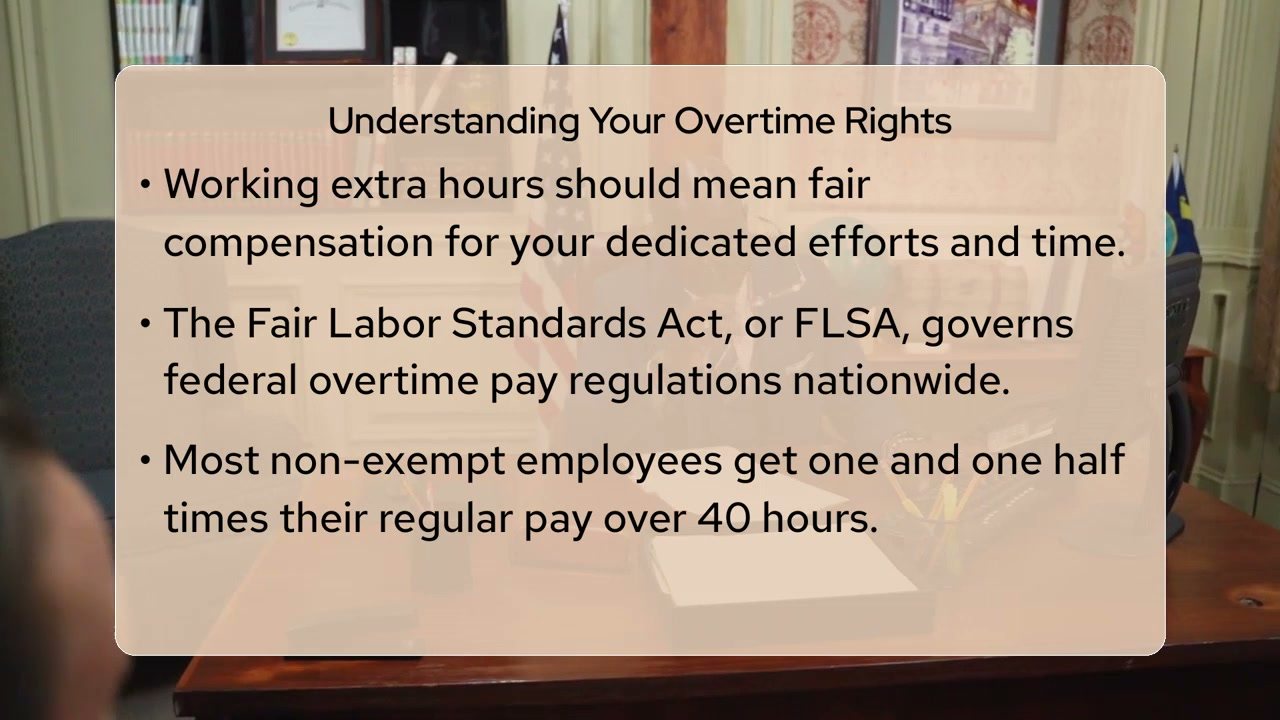
The deduction, created by the One, Big, Beautiful Bill Act for 2025 through 2028, is not a deduction for all overtime pay. According to the fact sheet, it applies only to overtime compensation required under section 7 of the Fair Labor Standards Act that exceeds the worker's regular rate. The key points:
- Only the premium counts. For a worker paid time-and-a-half, only the extra half is qualified overtime compensation. The base hourly pay for those hours is still taxable.
- Only federally required overtime counts. If an employer pays double time, only the half-time portion the federal law requires qualifies. Overtime paid under a union contract or a state law, for someone not eligible under the federal statute, does not qualify.
- Exempt employees are excluded. Workers exempt from the federal overtime rules, which commonly includes salaried professional, executive and administrative staff, receive no qualified overtime compensation, whatever their pay practices.
- Limits. The deduction is capped at $12,500 per return, or $25,000 on a joint return, and is reduced once modified adjusted gross income exceeds $150,000, or $300,000 for joint filers.
- Filing rules. The worker needs a Social Security number valid for employment, listed on the return, and married taxpayers must file jointly.
The FAQs also address federal employees, who can check their status in block 35 of Standard Form 50, where "N" means eligible for overtime under the federal law.
Who is affected
The deduction is available to itemizers and non-itemizers alike, but the income phaseout does most of the sorting. Two-earner professional couples well above $300,000 of income would not benefit. Neither would a surgeon, attorney or engineer on salary, since exempt employees fall outside the definition regardless of hours worked.
The more relevant cases for affluent families sit one step removed. A household where one spouse is a salaried executive and the other is an hourly nurse, police officer or technician may qualify if their combined income is near or below $300,000. Adult children in hourly jobs and working parents who file their own returns may also be able to claim it.
The after-tax math
Example, using round numbers: a nurse paid $50 an hour at time-and-a-half works 400 overtime hours in 2025. Overtime pay for those hours totals $30,000, of which $10,000 is the premium above the regular rate. The deduction is limited to that $10,000, not the full $30,000.
| Household (example) | MAGI | Overtime premium | Deduction |
|---|---|---|---|
| Married couple, one hourly nurse | $250,000 | $10,000 | $10,000 |
| Same couple with a salaried spouse raise | $450,000 | $10,000 | Reduced, likely to zero |
| Salaried exempt professional | $300,000 | None qualifies | $0 |
The tax saved equals the deduction multiplied by the household's marginal rate. The deduction reduces federal income tax only; Social Security and Medicare taxes on the overtime still apply.
Documentation for 2025
For 2025, employers are not required to report qualified overtime separately on Forms W-2 or 1099, under earlier transition relief in Notice 2025-62. Some employers may show it in box 14 of the W-2 or on a separate statement. When they do not, the IRS points workers to methods described in Notice 2025-69 and the Schedule 1-A instructions to calculate the amount. Beginning with 2026, separate reporting is required. Households claiming the deduction for 2025 may find it worth keeping pay stubs showing overtime hours and rates, and discussing with a tax preparer how the premium was calculated.
What to watch
The IRS notes that these FAQs were not published in the Internal Revenue Bulletin and may be updated, though good-faith reliance protects taxpayers from certain penalties. Proposed regulations and revised information return forms for 2026 are the next steps. Households near the $150,000 or $300,000 thresholds may also watch how year-end bonuses and investment income affect eligibility, since both count toward modified adjusted gross income.
Sources
- First reported Treasury, IRS issue FAQs to address the new deduction for qualified overtime compensation under the One, Big, Beautiful Bill (IR-2026-10) — IRS
- Questions and answers about the new deduction for qualified overtime compensation (FS-2026-01) — IRS
- Working Families Tax Cuts: Tax deductions for working Americans and seniors (FS-2025-03) — IRS
After TAX is an independent publication. Articles are general information, not tax, legal or investment advice. Consult a licensed professional about your situation.